How an Epoxy Garage Floor Job Runs
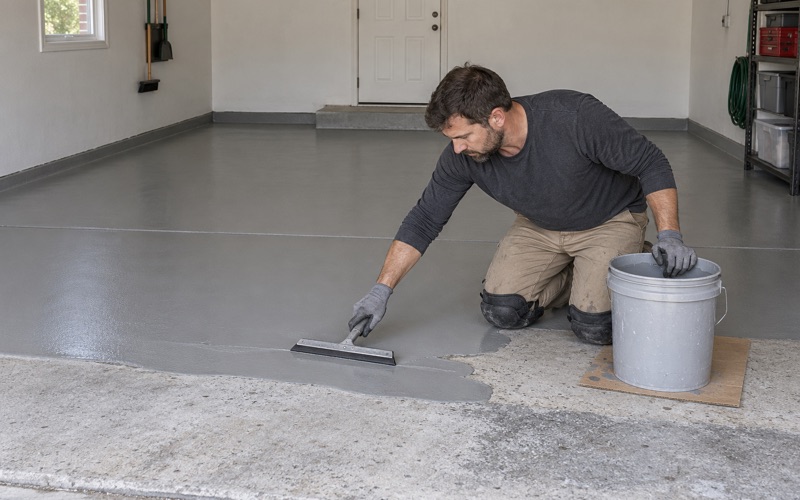
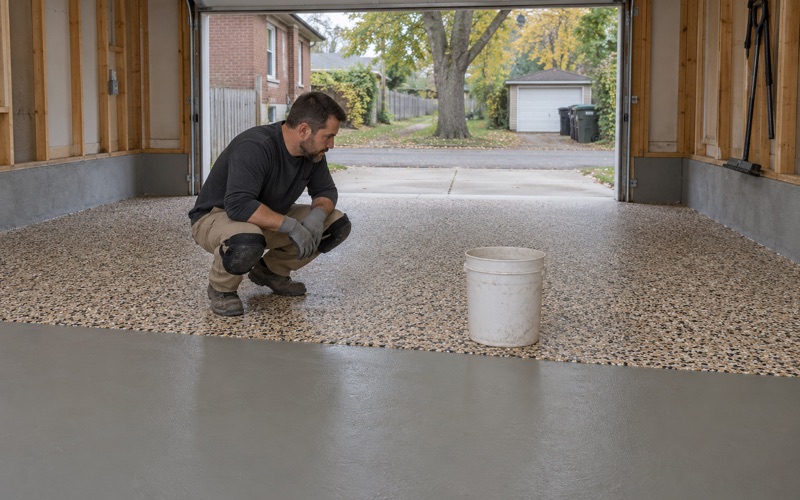
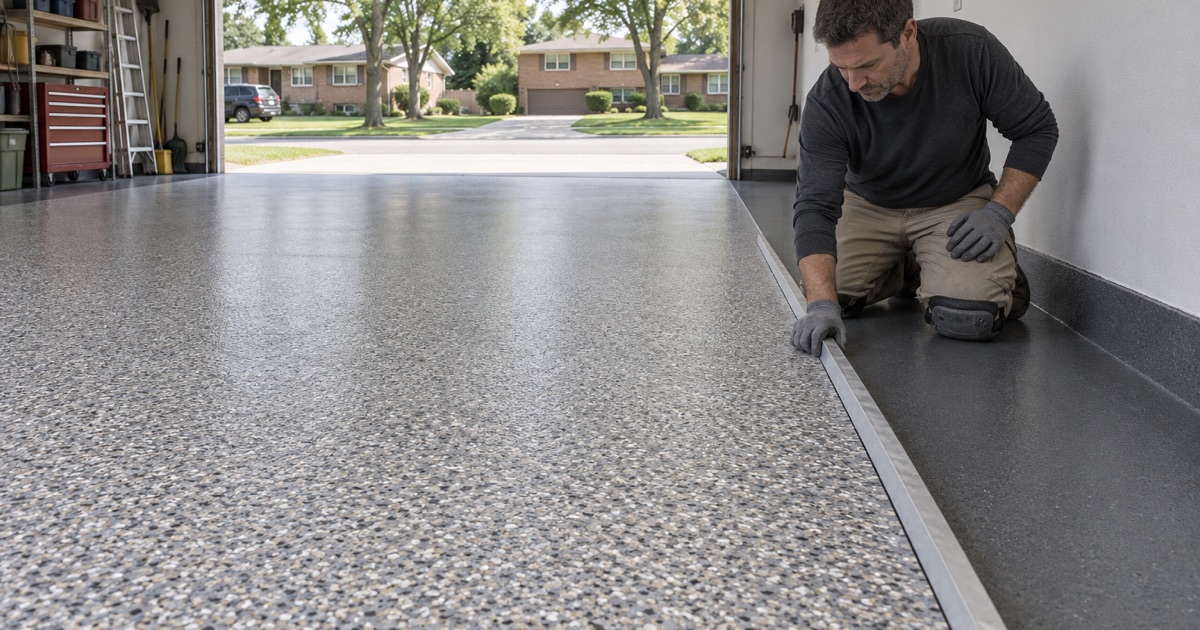
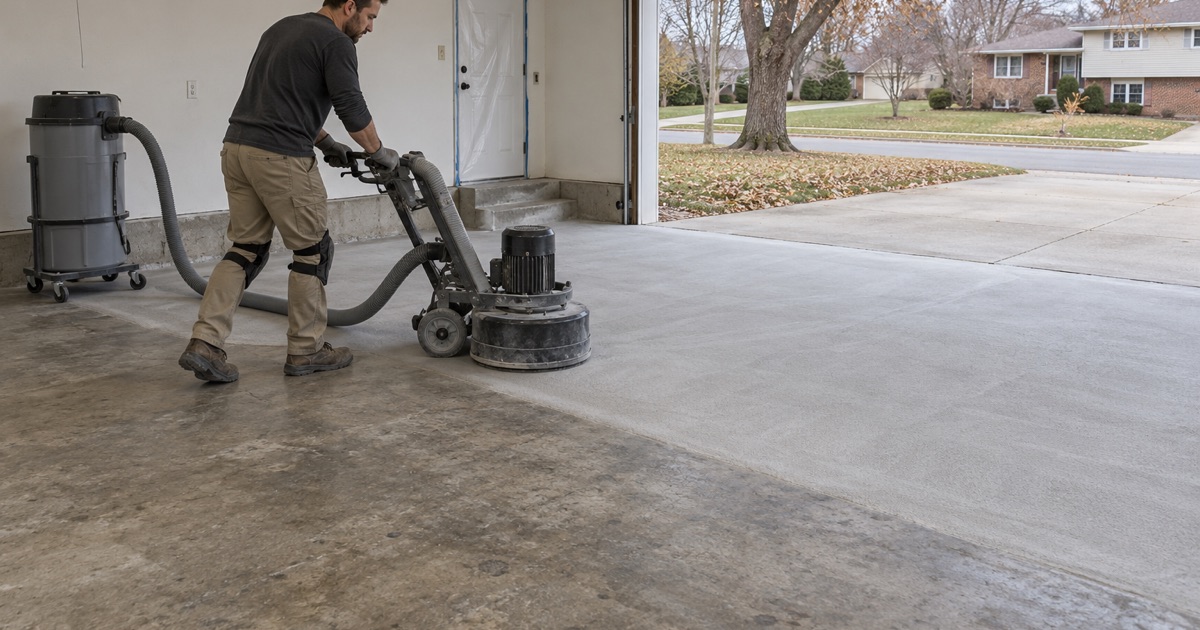
A garage job starts with a slab check, a moisture test and a written scope, then moves to grinding, crack and spall repair, the base coat, the broadcast and the topcoat. We tell you when you can walk on it and when you can park on it before we start, so the car has somewhere to go for the right number of nights.
Attached Garage Floors Next to the House
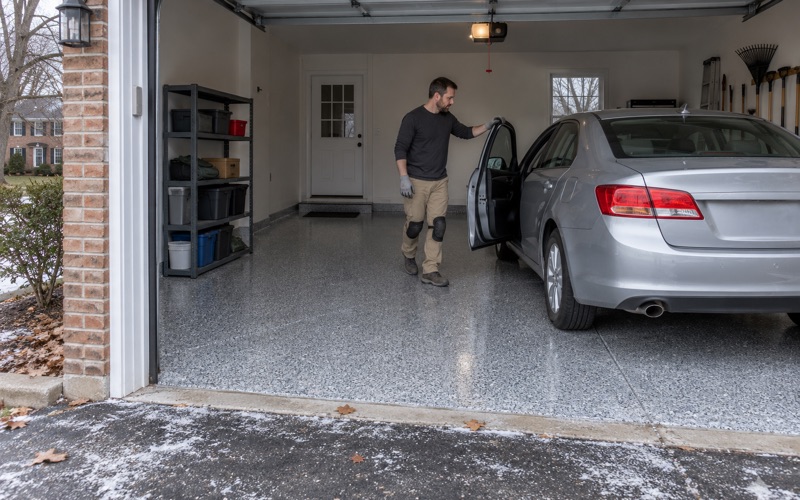
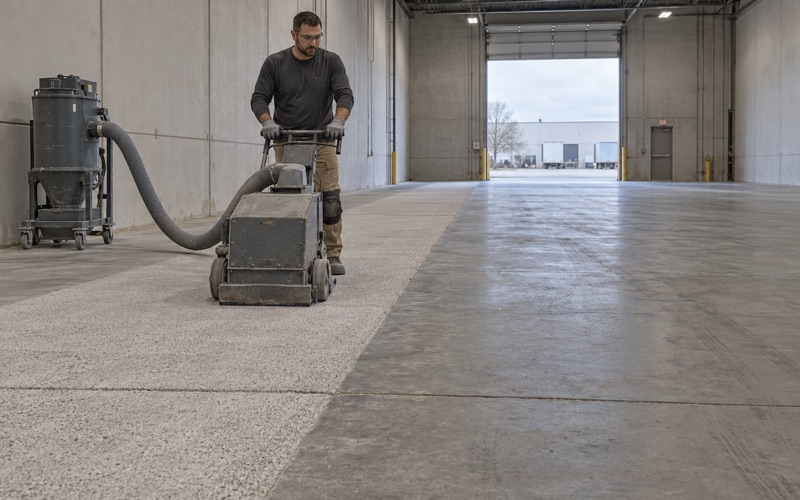
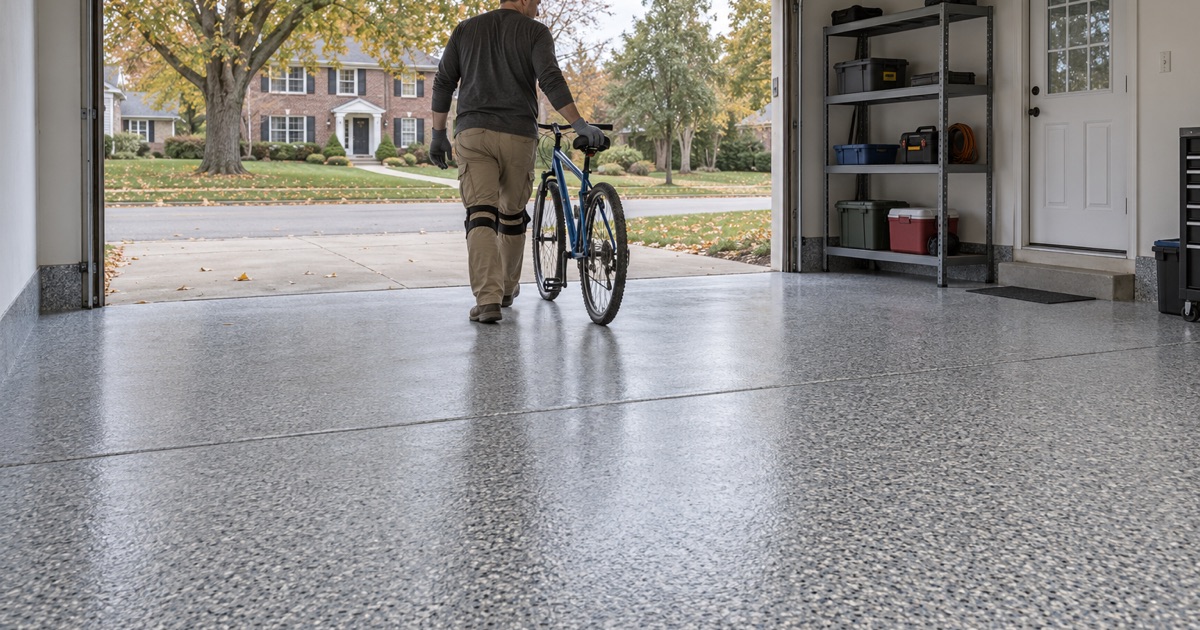
An attached garage shares a wall and often a door with the living space, so dust and coating odor are the two things homeowners ask about most. We grind with vacuum capture at the machine, seal the house door, and choose low-odor systems inside the Illinois VOC limits so the kitchen does not smell like a paint store.
Detached and Unheated Garage Slabs
A detached garage usually sits unheated through the winter, so its slab swings through freeze and thaw and stays cold long into spring. We coat these with systems that tolerate that cycling, and we schedule them for the months when the slab itself is warm enough to cure the epoxy properly.
Vapor Retarders Under New Downers Grove Garage Slabs
Downers Grove amends the 2021 International Residential Code to delete the R506.2.3 exception that elsewhere lets a garage slab go without an under-slab vapor retarder. A new garage floor poured in the village should sit over a vapor retarder meeting ASTM E1745, while a slab poured decades ago may have nothing under it, which changes what we test for and what we recommend.
Garage Slab Moisture Testing
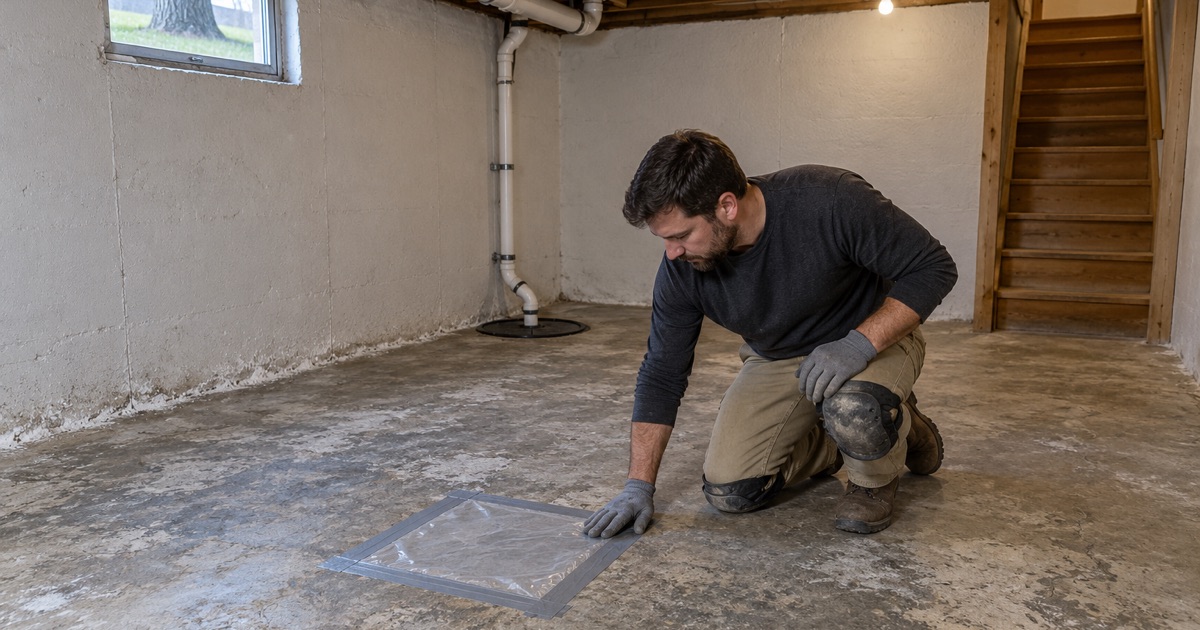
We start with an ASTM D4263 plastic sheet test and step up to ASTM F1869 calcium chloride or ASTM F2170 in-situ relative humidity probes when a slab looks damp or the system calls for numbers. The readings are compared against the thresholds in ASTM F710, and they decide whether the floor needs a moisture-tolerant primer before the epoxy goes down.
Concrete Crack and Spall Repair Before Coating
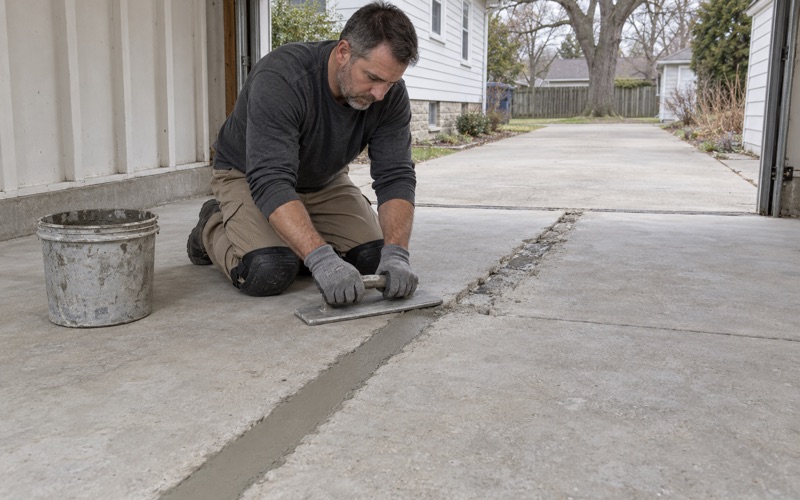
Cracks, spalls and pitting are mapped and repaired with a rigid filler or a flexible joint material before coating, depending on whether the crack is still moving. When a slab has heaved, settled or crumbled past patching, we tell you plainly that it needs replacement rather than a coating that will crack along with it.
Brine and Rock Salt on a Bare Garage Slab
Rock salt and calcium chloride brine soak into bare concrete, recrystallize as the slab dries, and push off flakes of the surface over a few winters. A coated floor keeps that brine on top where it can be rinsed off, which is the cheapest protection a DuPage County garage slab can get.
Cold-Weather Epoxy Coating
Epoxy cures by chemical reaction, and that reaction slows sharply on a cold slab and stalls when the surface sits near the dew point. We read slab temperature and the dew point spread at the surface before we coat, and an unheated garage in deep winter is told to wait for spring rather than risk a soft, cloudy floor.
Hot Tire Pickup on Garage Coatings
A tire coming off a warm highway softens a thin coating and peels it up as it cools and grips, which is called hot tire pickup. Thick, 100% solids epoxy with a polyaspartic topcoat resists it, while thin water-based paint sold as epoxy tends to lift in exactly the shape of your tires.
Store-Bought Epoxy Kits Versus a Professional Floor
A store kit relies on acid etching and a thin, water-based film, so it builds a fraction of the thickness of a ground, multi-coat professional system. We build the floor in layers over a diamond-ground profile, which is the difference between a coating that lasts years and one that is peeling by the second spring.
Epoxy Garage Floor Cost and What Moves It
Published Chicagoland ranges for concrete coatings run roughly $3 to $15 per square foot, and the floor you have decides where yours falls. Crack and spall repair, removal of an old coating, moisture mitigation, the flake or quartz broadcast and the topcoat are all line items, and our quote lists each one so two bids can be compared fairly.